I wonder how many artists have artistic families? I get my hand to eye skills
from my father, who designed the moving walkways at airports during his days as
a Chief Mechanical Engineer. I wrote a blog entry about him and a wonderful
friend of his who supported me when I was first starting out as a full time
artist.
http://www.pencilenvy.blogspot.com/2013/01/dinner-with-skip.html
Have
a great day!!!
All Posts (7766)
Sort by
I saw this link http://whatthecraft.com/how-to-pricing/ on Pinterest and started reading it. Seems to dissect the pricing process. Could be of some help to 'newbies'.
"Setting up an art fair scheduled should be referred to as "The Art of the Educated Guess". You have to decide which shows to apply to. You have to decide which images to send. Once you have your acceptances you have to decide which shows to actually participate in. Each of these decisions is based on so many factors that you can never have enough information about that they are really guesses, hopefully the educated type."
support of ArtFairInsiders.com. Their unstinting contributions in sharing news, stories, technical information and tales of joy and woe are a continuing gift to all of us in the business.
<
Please take a few minutes to vote and give thanks to these members. Prizes will be awarded.
Deadline for voting is January 28, 6 pm. Deadline will not be extended.
<
And if you really want to do a good job on this, the survey does not include the links to the posts and discussions, so if you'd open a new tab in your browser you could do a quick review of them before you vote.
Many of your favorite members have been nominated, including:
- Member of the year. The generous and helpful spirit who contributes the most to the community - Jim Parker, Geoff Coe, Larry Berman, Nels Johnson, Richard Sherer
- Best advisor. Who has the best answers for the questions you need answered? - Larry Berman, Alison Thomas, Warren Townsend, Robert Wallis, Ruth Funkenbiner, Karole Bowlds
- Personality of the year. Who intrigues you so that you always want to read their posts and makes you turn on your computer in the morning? - Barry Bernstein, Nels Johnson, RC Fulwiler, David Bjurstrom
- Author of the year. Who can be counted on to write the best blog post and reviews? Don Mabry, Brian Billings, Nels Johnson, Richard Sherer
- Funniest member. Who is the funniest?
- Newcomer of the year. Which newcomer to the community has made the biggest impact this year? Elle Heiligenstein, David Bjurstrom, Richard Sherer, Carrie Jacobson
- Special recognition. For the members who made unique contributions to the community. Paul Flack, Annette Piper, Geri Wegner, Diana Ferguson
Best blog post or discussion:
Jan. - "Channeling my Inner Tim Tebow", Geoff Coe
Feb. - "The No-Holds Barred Coconut Grove Art Festival Review", Barry Bernstein
Mar. - "Let's Fix out Industry", Ray Mosteller
Apr. - "Thank you I have a Job", Christine Mount Kapp
May - "Cherokee Triangle in Louisville, Creation & Destruction," Thomas Harris
June - "Art Birmingham, a Slow Start & a Slow Finish," Jim Parker
July - "Don't Just Survive, Thrive," Marti McGinnis
Aug. - "Tequila Report: How to Eat, Drink & Luxuriate in a Hospital", Nels Johnson
Sept. - "Nightmare on Walnut Street", Warren Townsend
Oct. - "Wake Up", Warren Townsend
Nov. - "How I Research Shows", Richard Sherer
Dec. - "Jury Fees, What's it For?", RC Fulwiler
Best Discussion:
"Complaining about Promoters", Carrie Jacobson
"How I Research Shows", Richard Sherer
"The Rejection Season Starts," Jim Parker
"Competitors in my Booth", Kim Smith
"Minnesota Art Shows: Beware...", Robin Aronson
"What's the Worst Question You've Been Asked at an Art Fair?", Jim & Linda Dalton
"Who We Were", Lois Anderson
Thanks to everyone who participates on this site. We all make this happen together!
Amenities: Lovely location (at the University of Miami, in front of the Lowe Art Museum), with booths on grass and also on pavement. Easy parking in a garage very near the booths. Nice breakfast provided both days. Friday set-up was easy and well organized, Sunday close-up was a free-for-all with artists in charge, which I think is usually the best way to handle it. Seemed to work for everyone.
Sales: very well attended festival with lots of affluent shoppers. Sales were, as usual, all over the chart. We had a good show with our mid-range jewelry, in part thanks to our mailing list. We showed here throughout the 90s, but haven't been back since 2003. A surprising number of patrons remembered us. Another jeweler, with work in our price range, barely covered booth fee. Some 2-D work did very well, some did "well enough", some did terrible. I heard "best show so far this year" and I heard "zero".
The Important Info: a gazillion great restaurants in Coral Gables make this a show to return to. Especially liked Las Vegas (Cuban) and Bangkok Bangkok (do I need to say Thai?) for their lunch specials.
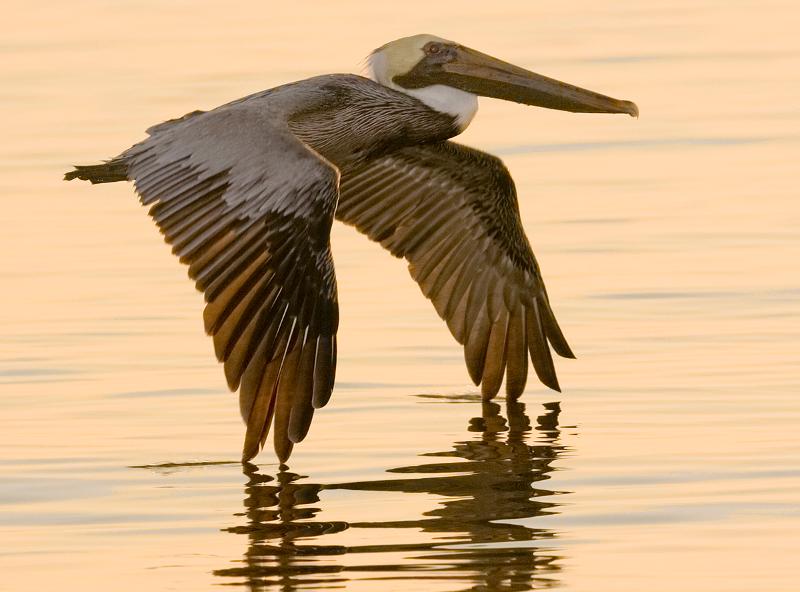
We all know people who are enamored with photography and dream of earning a living selling their best work at art fairs. One day Geoff Coe was on assignment taking publicity photos at a local art fair. During a lull he spent some time visiting with a well-known nature photographer who was exhibiting at the show when suddenly the light went on, "I can do this too." Fast forward a few months and he was up and running.
Was he just a lucky hobbyist? No. He'd spent years as a communications editor, photography columnist and freelance photographer by the time he moved to south Florida. Interested in nature photography he soon found himself in a flatwater kayak at the break of dawn stealthily observing Florida's many species of birds at their morning routines.
He knew little about them, but he would kayak, shoot, talk to birders and research until he became expert both at the intricacies of nature photography as well as a recognized wildlife specialist.
Thousands of photos and thousands of miles later Geoff 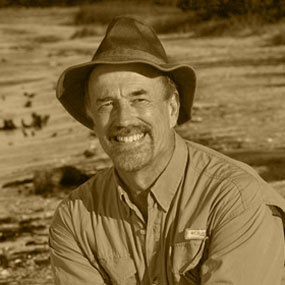 agrees with a friend who said to him, "Gee, what a great way to earn a living."
Learn more about Geoff and see more of his photos.
If you're in Florida this month meet him January 19 & 20 in Sarasota at the Sarasota Fine Art Festival, and January 26 & 27 at the Islamorada Fine Art Expo.
June 28-September 1 
Laguna Beach, California
Festival grounds on Laguna Canyon Road
125 Artists
Mail-in application deadline: January 25
In Person Jury Day - bring in your art: February 10
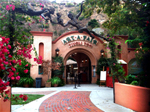
You are cordially invited to submit your application for the 47th annual Art-A-Fair Festival, one of three premier art shows held each summer in beautiful Laguna Beach, California.
Laguna Beach is famous for its artist's community. But Art-A-Fair goes beyond to discover artists from around the world and in other parts of the country as well as those who live right here in Laguna. Art-A-Fair jurists pride themselves on selecting art in all mediums for its summer Festival that will be rich in quality yet diverse in content so that every visitor to Art-A-Fair will connect with at least one artist's work.

Visitors are invited to leisurely walk among the artists as they create. Have a conversation and learn what inspired them or just quietly absorb the lovely garden ambiance of this artist's haven. You'll feel artistic passion all around, and when you want to take some of that home with you, it's easy. Two and three dimensional art abounds in every medium, including oil paintings, watercolors, acrylics, drawings, photography, digital art, mixed media, sculpture, jewelry, ceramics, glass and wood.
On weekends, Art-A-Fair bustles with live entertainment. Tivoli Too!, conveniently located on the grounds at Art-A-Fair and known for its epicurean cuisine, serves daily. Your day at Art-A-Fair wouldn't be complete without a delicious lunch or dinner and one of their famous margaritas!
Art-A-Fair is a membership organization and an artist cooperative. As an exhibiting artist/member you will become an integral part of the show operations. Artists work a designated six-hour work shift per week and must attend a training session for the shift. There are three or four mandatory meetings throughout the year.
More information: www.art-a-fair.com, (949)494-4514
Application: call-to-artists page: www.art-a-fair.com/callforentries.asp
Artist prospectus: www.art-a-fair.com/membership/docs/misc/prospectus2013.pdf
Application checklist: www.art-a-fair.com/membership/docs/misc/2013applicationchecklist.pdf
Submission form: www.art-a-fair.com/membership/docs/misc/2013digitalapplicationform.pdf
Contact information:
Mail CDs, paperwork and payments to: Art-A-Fair Festival, P.O.Box 547, Laguna Beach, CA 92652
Digital images may be emailed directly to: email@amazoncanvas.com
Eligibility:
- Artists may submit only their own original work
- all media are eligible for jurying and artists may jury with more than one
- three (3) works are required of each medium for jurying
- artists may jury artwork in person on jury day or by mailing in your application
- no commercial agents, dealers or manufacturers may enter
Jurying:
A jury entry will be judged for eligibility based upon quality, originality and presentation. Anonymity is maintained during the jury process. The jury consists of professional fine artists and master crafts-persons. They look for excellence in conception, execution and presentation, with the expectation of high levels of creativity and technical competence.
Fees:
A non-refundable jury fee of $40 per medium (3 physical pieces or 3 slides/digital/images) is required for each submission. Artists with 3-dimensional work may submit up to 3 slides per each piece.
Mary Gulino
VP of Marketing, Art-A-Fair
(949)371-3375
Has anyone done this show and can you share any information about it?
A friend and talented artist has put together a Pinterest board with tips and how-to stuff for working in the cybermarketing art environment. Go here: http://pinterest.com/creativechicksc/art-marketing/
May 18 & 19
Central Business District, Downtown
Saturday 10 to 5, Sunday 10 to 4
80 artists
Deadline: February 1
Currently in its eighth year, the Riverside Arts Fair is sure to please artists and patrons alike. Join us as we celebrate two days of art in downtown Riverside, Illinois. This fine art fair has quickly become a community highlight. It complements and confirms the appreciation for high quality design and materials that Riverside residents and our neighbors find in this quaint community.
Riverside Art Weekend – RAW – is a not-for-profit organization supported by the Village of Riverside and the Riverside Chamber of Commerce. This festival is held in the heart of this beautiful community. A multitude of fine art patrons, music, children’s art activities and more await those who choose to join us for this spectacular event.
Ribbon Awards: $1,100 • Attendance: 7,000+
Jury fee: $10 -- Booth fee: $285
The Riverside Arts Fair is organized by Erin Melloy of EM Events, a well established promoter of art shows in Chicagoland. EM Events are held in partnership with local business organizations bringing close interaction between each community and its' local art fair and ensuring you loyal patrons.
Learn more and apply: www.emevents.com
For additional information please contact:
Erin Melloy - 630.536.8416 or emelloy@emevents.com
~~~~~~~~~~~~~~~~~~~
Even more fine art fairs looking for you:www.CallsforArtists.com
Our podcast on January 17 was with Jennifer Rapp Peterson, an illustrator, greeting card entrepreneur, cartoonist, and oh yes, tech wiz! We talked about artist websites and her specific answer to "what to do", IndieMade.com, an inexpensive ($12 a month), technically unchallenging, beautiful place to host all of your website needs.
During the podcast several people called in to say they had new sites up and running in less than 2 hours! My best advice to you this month: don't get in your van and drive 200 miles, sleep in a hotel, eat out and hope to break even, or a little ahead, at that art fair you are considering. Keep that booth fee and the other expenses in your bank account, give yourself a weekend off and build that site!
Jennifer offered a free ebook to our readers/listeners who sign up for their mailing list:
Building an Artist Website: a Place Called HomeCreate more than just a website, build a website home. A website home can provide the foundation of any art business online. It's a place where visitors can find all of your information online. It's an artist's best marketing tool. Learn about what an artist needs from a website, why they need it and how they can make it happen.Sign up for the IndieMade.com mailing list and receive the free ebook: www.indiemade.com/newsletter
After you have your beautiful site up and running we'll come back and start talking about making money with this site.
How did you like this podcast? Learn anything? Inspired?
Romero Britto was recently announced as the 2013 Poster Artist for this festival. For those living under rocks or new to the business, CGAF is rated as one of the top shows in the country, consistently, year after year.
While the festival seems to be turning into more of a circus than an art festival, the quality of the art has always been top notch. While you may not like all the art, you can recognize the talent behind it. It is a joy to go early in the morning before all the commercial vendors get revved up and just wander among the booths.
CGAF used to have a poster contest each year. The winner received prize money and the unveiling of the poster is televised on the news and it is considered a big deal. Two years ago they picked Guy Harvey who is known for his game fish. I decried the use of someone who I had only seen on posters, drink cozies and t-shirts. I thought it was too commercial. Last year I admitted that I was hard to please because last year's poster was a beautiful painting, not poster type art.
So what is my "problem" this year? I enjoy Britto's whimsical art. He is all over Miami, on the sides of building, in front of buildings, on vending machines and in more stores than I can count. He does a lot for Miami also. He has a store as you are walking to the main entrance of the art festival.
Aside from the idea that the show's poster should be done by an artist actually juried into the show, this artist (as does Guy Harvey) has his worked manufactured by others. That is the antithesis of the CGAF. This is a show that won't allow prints. Believe me, I tried to get prints allowed years ago when I volunteered there. If this show has such high standards for its artists, why is it allowing commercial artists represent them with their posters?
Verizon vendors play loud music and yell into microphones, beer vendors hawk beer as if they were at a ball game and the poster is designed by an artist who sells manufactured product all over the world.
This is the 50th year of CGAF. The founders of the show wouldn't even recognize it.
On you schedual C, under what category to most of you report your show fee expense? )What we pay the promoter to rent a booth)The logical choices would either be Rent or lease business property,maybe advertising or other? Or am I missing a category?
July 11-14 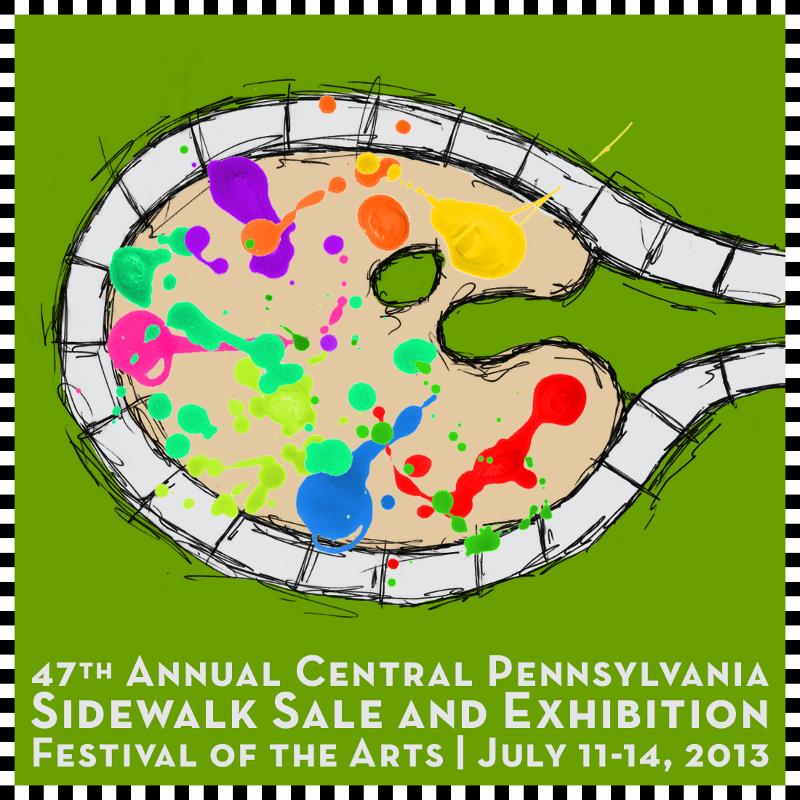
State College, Pennsylvania
Downtown State College & Penn State Campus
300 exhibitors
Deadline: January 25
Why should you apply to this festival? Here is what its director, Rick Bryant, has to say:
- We're always ranked in the Top Ten in the Sunshine Artist Magazine rankings (#2 last time around!)
- We bring roughly 100,000 people to State College over five days in July (the first day of our Festival is Children's Day, and our artists set up at the end of the day, so that they are there four days)
- The festival is in its 47th year and is on Penn State campus and the streets of the Borough of State College. Actually, we were founded by the State College Chamber of Commerce and Penn State's College of Arts and Architecture as a "town/gown" event.
- Penn State alumni return for "Arts Festival Alumni Weekend," a time to renew old college ties, attend special programs, and, of course, the arts festival. Some folks-those who are nostalgic for life before air conditioning-even opt to stay in dorms! Artists can do that too.
- We hand out over $17,000 in prizes. The top prize is $2,500
- Our festival features the outdoor show, an indoor gallery exhibition, a celebration of Italian Street Painting, performing arts on several indoor stages and four outdoor stages, and a full day of activities for children
- And if you're up for it, there's a 10k/5k run bright and early Sunday morning with over 500 entrants
- Notification is March 18
- Booth fee is $480 for 10x10, $960 for 10x20
For more info: www.arts-festival.com/sidewalk_sale.php
Apply: www.Zapplication.org
Rick Bryant: email rbryant@arts-festival.com
~~~~~~~~~~~~~~~~~~~~~~
Find more art fairs looking for artists - new ones added daily - CallsforArtists.com
I just trying to figure if I am going a overboard.
How important is the framing of your 2d art.
I had see art with no frame, art frame with basic materials, art frame with basic conservation materials and the people like me that go all the way with museum quality framing.
What is your take. Does matter at the art shows?
Like any other year I ask myself what I can do better? The list is very long and I keep going back to improve my English. There is one thing that gave me bad taste.
When is good time to ask for advice. Let start that you do not have a group art fair artists near to you. You can not ask your regular friends about your work and presentation because they wont be honest with you.
If ask an artist at the show even when they do not have anyone in the booth is just a bad idea. So when is a good time to ask another artist for help?
Let assume you been told go more that direction with your work. Talk about your images. Print bigger and put less in the wall. Your work looks to uniform (this one is odd to me), you should take image of what people can not do (this is impossible in photography). the list keeps growing.
What I know I take pictures that I can relate and be emotional about them. I still like know if I am going in the correct direction but still when is good time to ask another artist. Even more if you like my work how I can improve my sales. Please to do not tell me stay in your booth and dress with a tie.
Still when is good time to ask another artist?
Open Letter to Art Show Staff
Dear Art Show Personnel:
Admit it, even the best most forward thinking of you from time to time get lost down the slippery slope of what the jurying process means. Often it's presented as sort of a competition, and believe me, it sure can come across feeling that way from the artist's point of view. But it is healthier for all involved to take a broader view.
As an artist who has participated in many top shows I like to think of this process less as a competition and more as a jury's own creative project; building a beautiful array of excellence. Thus those that aren't included aren't identified as less or inferior but only as better suited to a different collection. See the difference? Better yet, feel the difference?
Respectfully,
Every Artist Who's Submitted an Application to Your Show
A Puzzling Process
The buzz is beginning to be generated for this season's shows - the includes, the excludes, the who's-ins, the who's-outs.....and I just wanted to go on record as saying I handle not being selected (AKA "Being Rejected") by a jury as simply my current body of work not being the perfect piece to the puzzle they're assembling. This frees me up to stay positive about my work and eliminate any need to hold a grudge for any reason. Heck it even lets me celebrate all who do get into a show!
Here's the weird thing about me and my art, last year I was surprised by three awards in three wonderful top notch shows - and while it felt simply amazing to have been so honored, the fact is I don't get it. How can one mindfully, competently and intentionally created body of work possibly be 'judged' as better than another? Isn't this all just a matter of taste?
Oh, sure, some artists create better booth presentations, have better slides and are superior business people when it comes to packaging their ideas, but on some pure level I just can't wrap my head around Art as a Competitive pursuit!
The Real Includes - the Genuine Prizes
Besides these prizes given to me presumably by my peers, I don't think there's any way I can plan nor prepare to repeat any of those this year. You know what winning situations I am looking forward to recreating this summer though? The ones where children came into my booth and spent their own birthday money on an actual piece of art. Yep, happened two times. I wrote about it here.
How do You Philosophize the Jurying Process?
I, and anyone who reads this post, would love to hear your thoughts on this too. I know there's a treasure trove of thoughts and ideas embodied by the various users throughout this site; I'm looking forward to reading some alternate views!
Inspired by Nels "Stepping Off the Cliffs Again"
I haven’t been at this very long
I find myself floating hither and yon
I shoot for profit
I shoot for fun
I’m glad for the prizes I’ve already won
I haven’t been at this very long
I study the masters they won’t be wrong
I like Nels
And Larry and Jim
Where would we be were it not for them
I haven’t been at this very long
Some day I’ll sing a different song
I’ll shoot for fun
I’ll make big money
I’ll sit on my porch raking in the honey
